



…As metered customers rise, estimated billing falls
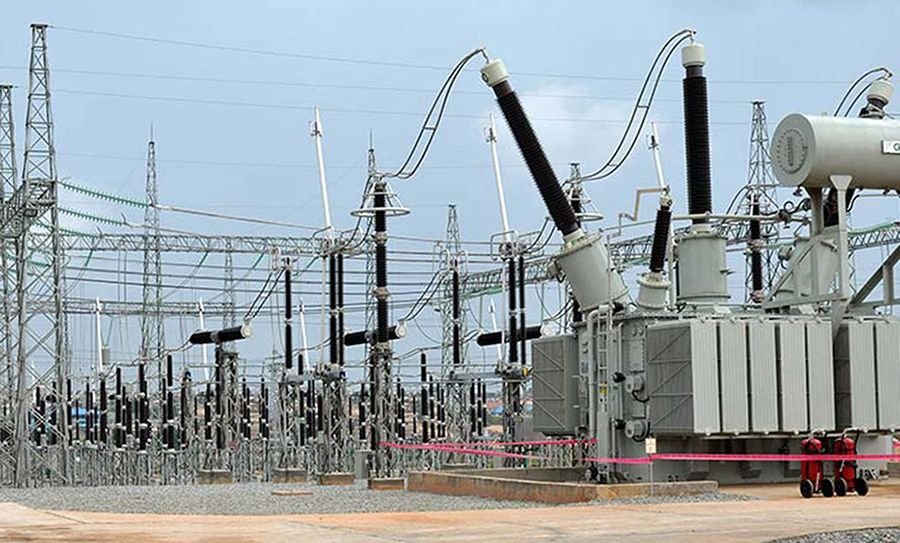
Electricity Distribution Companies (Discos) generated a total revenue of ₦630.93 billion in the fourth quarter (Q4) of 2025, reflecting improved collections amid rising electricity supply and a growing number of metered customers.
According to the latest electricity report released on Monday by the National Bureau of Statistics (NBS), the figure represents a 10.64 per cent increase from the ₦570.26 billion recorded in the third quarter (Q3) of 2025. On a year-on-year basis, revenue collection rose by 23.75 per cent from ₦509.84 billion in Q4 2024.
The report showed that the total number of electricity customers increased to 12.16 million in Q4 2025 from 12.03 million in the preceding quarter, representing a 1.11 per cent quarter-on-quarter growth.
However, compared with 13.30 million customers recorded in Q4 2024, the figure reflects an 8.52 per cent year-on-year decline.
Metering continued to improve during the period, with the number of metered customers rising to 6.97 million from 6.66 million in Q3 2025, representing a 4.58 per cent quarterly increase.
On a year-on-year basis, metered customers grew by 12.18 per cent, up from 6.21 million in Q4 2024.
In contrast, the number of customers on estimated billing declined to 5.20 million in Q4 2025 from 5.37 million in the previous quarter, a 3.20 per cent decrease. Compared with 7.09 million estimated customers in Q4 2024, the figure dropped by 26.67 per cent, indicating continued progress in metering.
Electricity supply also improved during the quarter. The NBS reported that 6,627.56 gigawatt-hours (GWh) of electricity were supplied in Q4 2025, compared with 6,158.52 GWh in Q3 2025, representing a 7.62 per cent quarter-on-quarter increase. Year-on-year, electricity supplied increased by 6.76 per cent from 6,207.85 GWh recorded in Q4 2024.
Meanwhile, the NBS Transport Fare Watch for May 2026 showed that transportation costs continued to rise across the country.
The average fare for bus journeys within cities increased by 2.43 per cent to ₦1,431.25 in May 2026 from ₦1,397.27 in April 2026. On a year-on-year basis, the fare surged by 38.63 per cent from ₦1,032.46 recorded in May 2025.
Similarly, the average fare for intercity bus travel rose by 0.96 per cent month-on-month to ₦9,699.55 in May 2026 from ₦9,607.41 in April. Compared with May 2025, intercity bus fares increased by 21.89 per cent.
Air travel also became more expensive, with the average fare for specified domestic routes rising slightly by 0.12 per cent to ₦157,552.19 in May 2026. Every year, airfares increased by 20.86 per cent from ₦130,361.85 in May 2025.
Motorcycle (Okada) transport fares recorded one of the sharpest increases, rising by 3.56 per cent month-on-month to ₦1,072.51, while year-on-year the fare jumped by 52.45 per cent from ₦703.54.
Water transport fares also climbed, increasing by 2.41 per cent to ₦2,276.48 in May 2026 from the previous month. Compared with May 2025, water transport fares rose by 30.88 per cent.
At the state level, Ondo State recorded the highest average intercity bus fare at ₦11,080, followed closely by Abia State at ₦11,066.13, while Kwara State and Edo State recorded the lowest fares.
For intra-city bus transport, Zamfara State posted the highest average fare at ₦1,878.80, followed by Taraba State, whereas Abia State and Adamawa State recorded the lowest fares.
In air travel, Kano State had the highest average fare at ₦184,139.29, ahead of Lagos State, while Gombe State and Nasarawa State recorded the lowest average fares.
Motorcycle transport was most expensive in Kaduna State, followed by Lagos State, while Adamawa State and Akwa Ibom State recorded the lowest fares.
For water transport, Rivers State had the highest average fare at ₦6,893.55, followed by Bayelsa State, while Borno State and the Federal Capital Territory recorded the lowest fares.
Regional analysis showed that the South-West recorded the highest average fare for intra-city bus transport at ₦1,564.31, while the South-East posted the lowest.
The South-West also had the highest average intercity bus fare, while the South-South recorded the highest average airfare and water transport fares. Motorcycle transport was also most expensive in the South-West, whereas the North-Central recorded the lowest average Okada fare.